
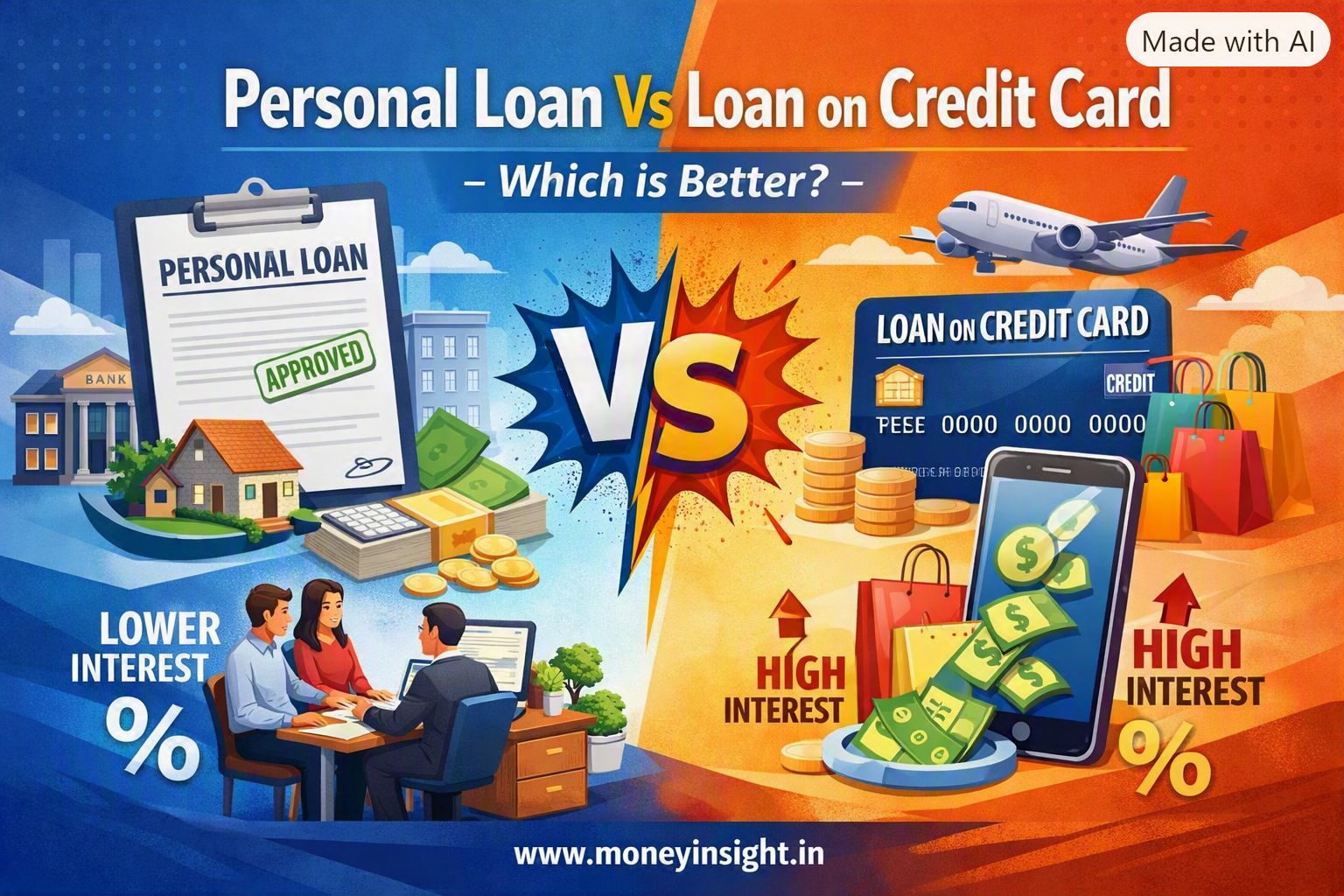
Personal Loan Vs Loan on Credit Card-Which is Better ? : When you need money urgently, a personal loan and a loan against your credit card can both provide quick access to funds. However, the two options differ significantly in terms of interest rates, repayment periods, processing fees and flexibility. Choosing the right option depends on your borrowing requirement, repayment capacity and the cost of the loan.
What is a Personal Loan?
A personal loan is an unsecured loan offered by banks and financial institutions based primarily on your income, credit score and repayment history. You can generally use the money for almost any legitimate personal requirement, such as medical expenses, education, home renovation, travel or debt consolidation.
Personal loans usually offer a fixed interest rate and a predetermined repayment tenure, which may extend from one to several years. Because of the longer repayment period, they can be suitable for relatively large expenses that cannot be repaid quickly.
What is a Loan on a Credit Card?
A credit-card loan allows an existing cardholder to borrow money against the available credit limit or through a pre-approved loan facility offered by the card issuer. Depending on the bank, it may be called a credit card loan, instant loan, loan on card or personal loan on credit card.
One major advantage is convenience. Since the lender already has information about your credit-card usage and repayment history, eligible customers may receive the loan quickly, sometimes without submitting extensive documentation.
However, the interest rate and fees can vary considerably between lenders and customers. Therefore, borrowers should carefully check the total repayment amount before accepting the offer.
Personal Loan Vs Credit Card Loan
A personal loan is generally preferable when you need a larger amount and a longer repayment period. It may also offer a comparatively lower interest rate than borrowing through a credit card, depending on your credit profile and the lender.
A credit-card loan can be more convenient when you need quick funds for a short-term requirement, particularly if your bank has already provided a pre-approved offer. The application process may be faster, and documentation can be minimal.
However, borrowers should not confuse a loan on a credit card with simply withdrawing cash using the credit card. Credit-card cash advances can involve additional fees and interest costs, making them expensive if the amount remains unpaid.
Which Option Should You Choose?
If your requirement is substantial and you need several months or years to repay the amount, a personal loan is generally the better option. It provides structured EMIs and a clearly defined repayment schedule.
On the other hand, if you need a relatively small amount immediately and have a competitively priced pre-approved credit-card loan, it can be a convenient alternative.
Before choosing either option, compare the annual interest rate, processing fee, GST and other charges, foreclosure or prepayment charges, EMI and total repayment amount. A lower advertised interest rate does not always mean a cheaper loan if additional charges are high.
Conclusion
Both personal loans and credit-card loans have their advantages. A personal loan is generally better for larger, planned expenses and longer repayment periods, while a credit-card loan can be useful for quick and short-term financial needs. The best choice is the one that offers the lowest overall borrowing cost while keeping the EMI comfortably within your repayment capacity. Always read the lender’s terms and conditions before accepting a loan.
Read Also:
Also Read:
How to make maximum profit with minimum investment from the Stock Market ? – MoneyInsight
Visit our another Group Website for more such research articles:
www.news4you.in
Visit & Subscribe our Devotional Music Channel on YouTube:
Indian Devotional Music – YouTube
Visit our Website regularly for more such Educational Research Articles:
MoneyInsight – We Provide Insight to Your Money